
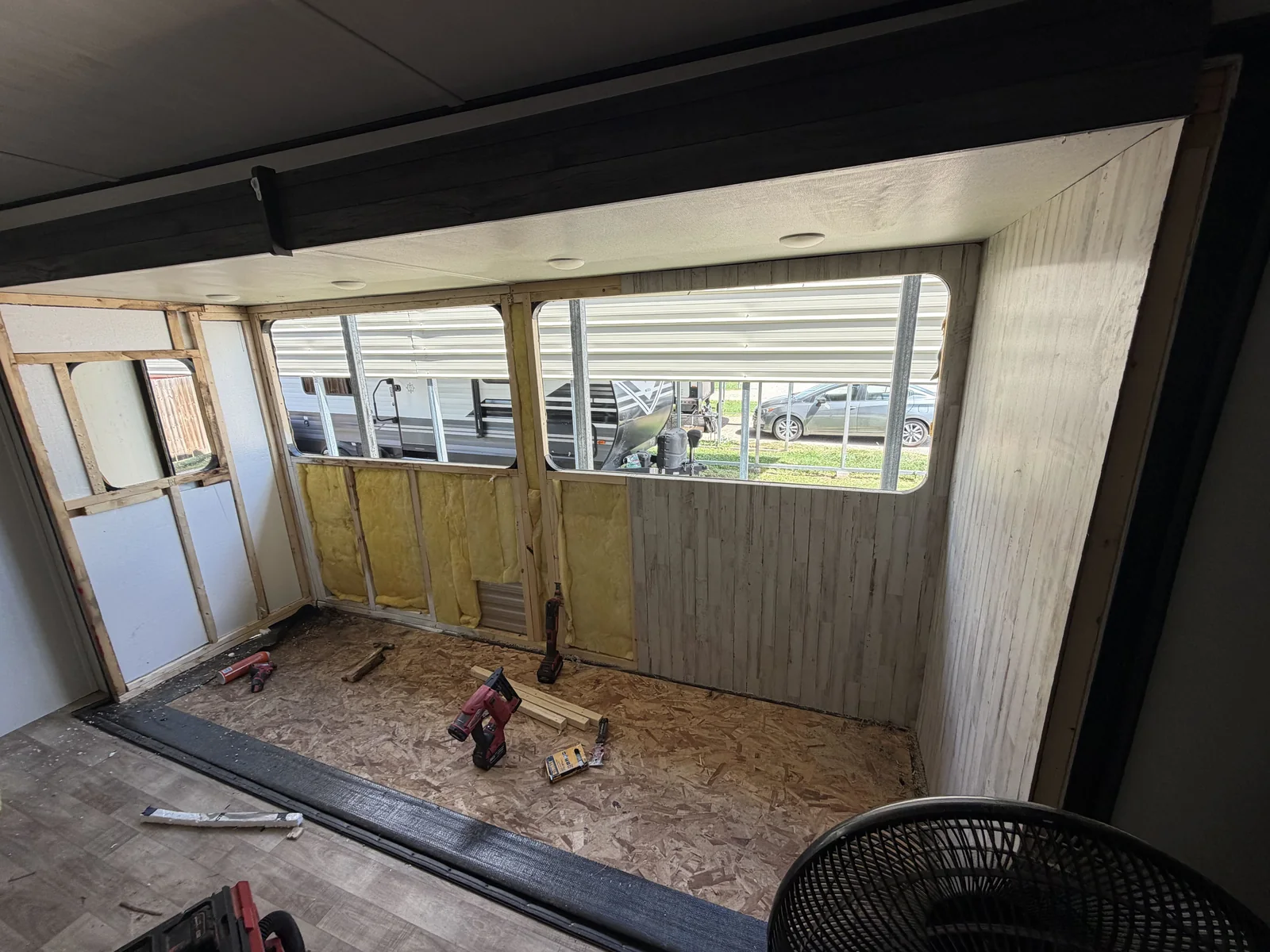
How Much Does RV Floor Repair Cost in Texas?
RV floor repair costs $200 to $12,000, a consumer RV repair cost site says. Most owners spend $800 to $4,500 by that site’s numbers. A small soft-spot patch at a shop runs $400 to $1,500. A full structural floor rebuild runs $5,000 to $12,000 or more.
The spread comes down to how far the water went before anyone caught it. A soft spot found early is a patch, while rot across the floor means a rebuild. These are published market numbers, not our price list. Finding the wet wood and the leak behind it is the first step of RV floor repair.
What does each RV floor repair cost?
The table draws on one consumer RV repair cost site. Its floor guide was updated in October 2026, with costs verified in June 2026.
| Floor repair or replacement | Published market range |
|---|---|
| Small soft-spot patch, do it yourself | $50 to $300 |
| Small soft-spot patch, at a shop | $400 to $1,500 |
| Surface flooring replacement, at a shop | $800 to $2,500 |
| Partial subfloor, about 15 to 40 square feet | $2,000 to $5,000 |
| Full structural floor rebuild | $5,000 to $12,000 or more |
The surface row is the floor covering alone, laid over decking that is still sound. The partial subfloor row means water reached the plywood and rotted a real section. The full rebuild row means rot has spread across most or all of the floor.
Read the ranges as a guide to the size of the job, not a quote.
What drives the price of RV floor replacement?
The biggest swings in RV floor replacement cost come from the water and from what sits on top of the floor.
- How far the water went. A soft spot found the same season it started is a $400 to $800 shop repair, the cost site says. The same spot found three seasons later is a $3,000 job at the least.
- What sits on the floor. Cabinets, appliances and the toilet may have to come out before anyone can reach the decking. Once everything has to come out, the cost site says a soft-spot job can push past $2,000.
- How deep the rot goes. An epoxy consolidant can firm up wood that is soft but not rotted through, on small, early soft spots. Real rot gets cut back to a joist and replaced with matched 3/4-inch plywood, the site says.
- Labor. Teardown and reassembly take hours, and every cabinet or fixture that comes out has to go back in.
- The leak repair. New decking under an old leak gets wet again. Stopping the leak at the roof seam, the window, the plumbing or the door is part of the job.
Should you repair a section or replace the whole RV floor?
Usually repair the section, as long as the rot has not spread across the floor. Replacing only the damaged area saves 50 to 70 percent versus a full floor pull, the cost site says.
The catch is moisture. The site says a reading below 15 percent in the subfloor generally means the area has dried. Above 20 percent, water is still present. New decking laid over wet wood holds that water in.
When rot runs across most of the floor, compare the patch quote with the full rebuild row. A string of patches on a floor that keeps going soft adds up. That is why the diagnosis comes before the quote.
How long does RV subfloor repair take?
Subfloor work with teardown and reassembly runs 5 to 14 shop days, the cost site says. Surface flooring over sound decking goes faster. Parts and materials can add time when a repair needs them.
Plan around where the RV sits. A full-timer in an RV park lives with the work in progress, so ask how the job will be staged.
What causes a soft RV floor?
Water that reaches the wood is the cause to rule out first. A travel trailer maker’s owner’s manual says maintaining the seals keeps moisture from entering and causing severe damage such as rot, mold or mildew. The same manual says weather and road vibration cause seals to dry, crack or separate.
That water can come from several places, and each one points to a different fix:
- The roof. A failed roof seam can send water down the wall and under the floor. See RV roof repair.
- The plumbing. A slow drip under the sink, the toilet or the water heater soaks the decking from below. See RV plumbing repair.
- The walls. A wall that has gone soft or delaminated often sits beside a soft floor. See RV body and collision repair.
- The slide-out. A slide room has its own floor and its own seals. For that floor, see what slide-out repairs cost.
What can you check before you call a technician?
- Press the floor. Step on the areas by the door, the kitchen sink, the toilet and the shower. A spot that gives or flexes is worth a look.
- Look up and around. Stains on the ceiling, around windows or at the base of a wall point to where the water came in.
- Open the cabinets. Check under the sinks for wet wood, swelling or a musty smell.
- Check the seals. Look for cracked, dried or separated sealant on the roof, the windows and the door.
Call a technician when the soft area grows, the floor covering lifts, or you smell mold or mildew.
Who handles RV floor repair around San Marcos?
River Cities RV Service repairs RV floors where the RV sits, within about 50 miles of San Marcos. That can be an RV park, a campground, a storage lot or a driveway. You can also bring the RV to our San Marcos shop.
We find and stop the leak, cut out the soft or rotted decking, put in new decking and lay the floor covering over it. We work on travel trailers, fifth wheels, motorhomes and campers. Have a service contract or insurance claim? We diagnose on site and submit the claim to the company that holds your coverage. You pay the deductible. Our page on RV warranty and insurance repairs walks through each step.
The service call covers the diagnosis and the trip. After the diagnosis, the quote for the repair goes in writing, and we order parts when the repair needs them. See what our RV floor repair service covers, or call or text (512) 850-7257.